
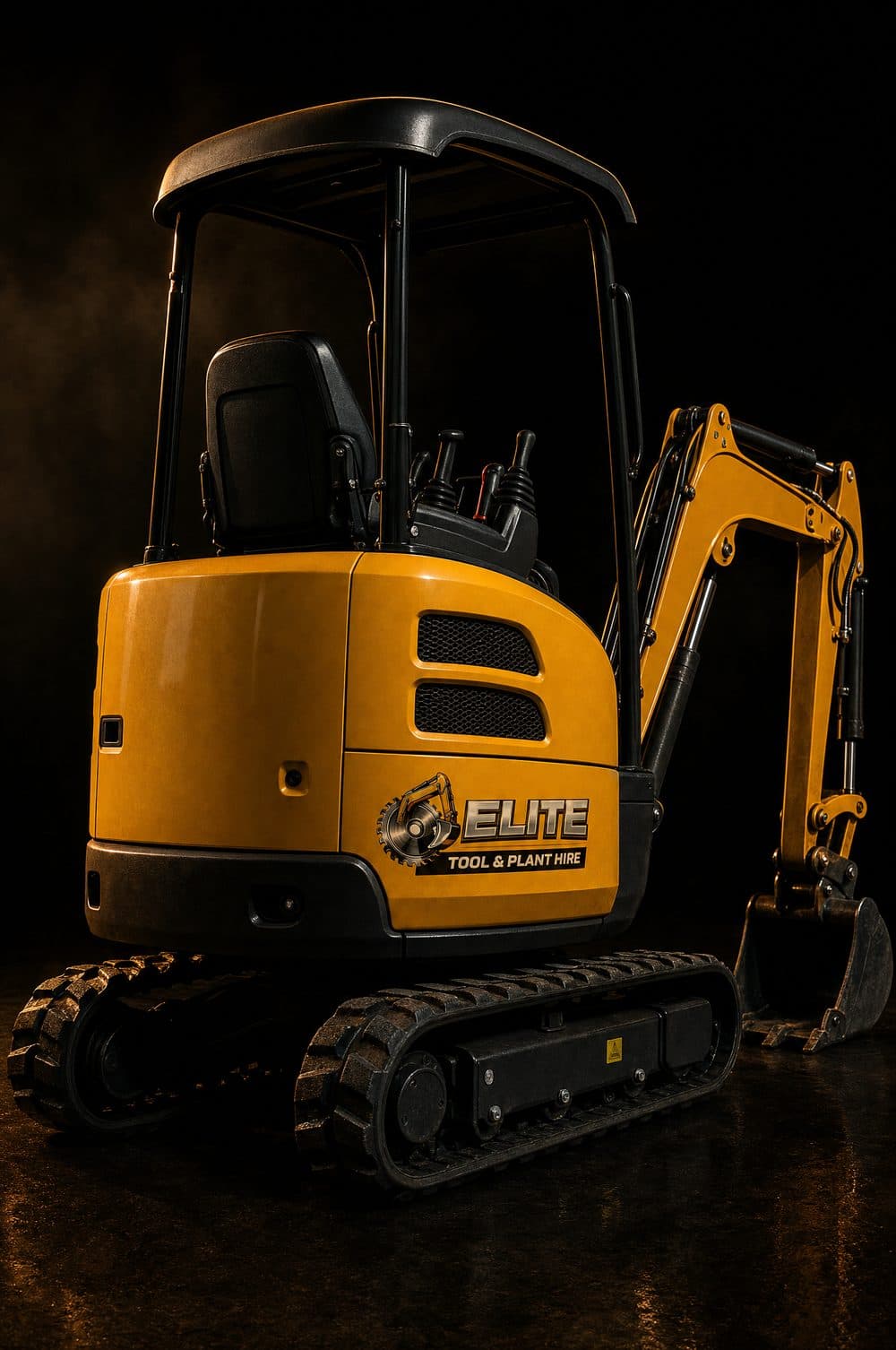
Mini digger sizes: micro, mini and 3 tonne compared
Most people choose a digger by the size of the hole. Choose it by the narrowest point on the way in, then by the job. The three sizes on our yard, side by side.

Most people pick a digger by the size of the hole they want to dig. The better question is how wide the narrowest point is between the road and the place you are digging, because a machine that cannot get there does not dig anything. Get the access right first and the job usually tells you the rest.
We hire three sizes of digger from the yard on Leek Road in Hanley: a micro digger, a 1.5 tonne mini digger and a 3 tonne digger. This guide sets them side by side, explains what each one is for and shows you how to measure your access before you book.
Mini digger sizes at a glance
The quick version. Each size is a step up in reach and weight behind the bucket, and a step up in the width it needs to get in.
| Machine | Width it needs | Usual way in | Jobs it suits |
|---|---|---|---|
| Micro digger | 690mm across the tracks | A standard side gate or a passage between houses | Footings, drainage runs and garden clearance behind a house |
| Mini digger, 1.5 tonne | 980mm across the tracks, so roughly a metre clear | A driveway, double gates or an open frontage | Footings, digging out a drive, ponds, levelling |
| 3 tonne digger | Around a metre and a half clear | A driveway or an open site, on ground that takes 3.5 tonnes | Strip footings in one pass, deep drainage, a full site strip |
Every digger goes out with three buckets as standard, a ditcher and two trenching, and every one is dry hire: you get the machine, and you or someone on your team runs it.
Micro digger width and the jobs it gets to
A micro digger is 690mm across the tracks on ours, which are Kubota and Takeuchi. A standard timber side gate is roughly 900mm, so the micro clears it with room either side and goes down the passage between two semis without the gate coming off its hinges.
That makes it the machine for the back garden you cannot otherwise reach: footings for an extension or a garden room, a drainage run, a soakaway, lifting an old patio or clearing roots and rubble out of overgrown borders. It digs slower than a bigger machine, but a slower digger in the right place beats a faster one parked on the pavement.
If your gate is the only way in, the micro is the answer, even when the job feels like it wants something bigger.
The 1.5 tonne mini digger most jobs want
If you can get it in, the mini digger is the one most jobs actually want. At 1.5 tonne it has more weight behind the bucket, shifts spoil in bigger bites and gets through a day of footings in roughly the time a micro takes to do half. The cab is enclosed, which matters more than it sounds on a wet day in November.
The catch is width. At 980mm across the tracks it will not go through a standard side gate, so it is a machine for driveways, double gates and open frontages. It also carries a dozer blade, which is as useful as the bucket for levelling as you go, and we can fit a breaker attachment if you have concrete to lift first.
3 tonne digger hire for jobs that have outgrown a mini
The 3 tonne digger is the step up when the job is bigger than the access is tight: a long strip footing, a large drive dug down to formation level, deep drainage or a whole plot taken down to level. It digs to depth in one pass rather than three, and its weight means old hardcore and compacted clay stop being an argument.
It needs around a metre and a half of clear width and ground that will take three and a half tonnes, so plan the route as carefully as the dig. Rubber tracks spread the load, but a machine that size still marks a lawn and will crack an old flag path, so board out anything you are keeping.
How to measure access before you hire a digger
Two minutes with a tape measure saves a wasted delivery. Do it like this:
- Walk the whole route from where the machine is unloaded to where the digging is. Not just the gate: the full way in.
- Measure the narrowest point. The usual culprits are a soil pipe or a downpipe on the passage wall, a meter box, a gatepost halfway down, or the corner at the end of the path.
- Look for steps, kerbs and slopes. A step up into the back garden stops a machine as surely as a narrow gate.
- Check what the tracks will cross: a lawn, block paving, a manhole cover or an old flag path. Plan to board out anything soft or that you want to keep.
- Ring the yard with the number. Tell us the narrowest width and the job, and we will tell you which digger goes.
If the narrowest point is under a metre, you are looking at the micro. If it is a metre or more, the mini is likely the better day's work. If you have a driveway or an open site and plenty of spoil to move, ask about the 3 tonne.
Matching a dumper to the size of digger
Whatever the digger takes out has to go somewhere, and a barrow does not keep up with a machine. Match the dumper to the digger and to the same access:
- Tracked dumper with a micro digger. It carries 500kg on 690mm tracks, so it goes through the same gaps and crosses a lawn without churning it up.
- 1 tonne dumper with a mini digger, where the access is wide enough. It moves more per run.
- 3 tonne dumper with a 3 tonne digger. The bigger digger fills a small dumper faster than it can empty itself, so match them and stop the digger waiting.
Getting your digger to site
You can collect from the yard on Leek Road in Hanley if you have a plant trailer and a vehicle that can tow it, or we deliver seven days a week. If you have not used a digger before, say so when you collect it and we will run you through it before you go.
Before you dig anywhere near a house, find out what is underground. Drains, water pipes, gas and cables are rarely where you expect on an older property, so get a plan or a scan on anything you are not sure about.
Digger hire in Stoke-on-Trent from the Leek Road yard
Still not sure which size you need? Measure the narrowest point, describe the job and ring us on 07448 856 620. We would rather tell you on the phone that it is the micro than turn up with a machine that will not fit. Book on our mini digger hire in Stoke-on-Trent page, or see everything else on our tool and plant hire in Stoke-on-Trent page. We deliver across Newcastle-under-Lyme, Crewe and Nantwich too.

How to use a wacker plate on a type 1 sub-base
The plate does the vibrating. Your job is the layers, the moisture and the route. How to compact MOT type 1 so a drive or patio stays where you laid it.
Read the guide
How to level a garden: the machines and the order of work
A few dips need a bag of top dressing, not a digger. A real slope needs the turf off, the topsoil saved and the ground cut and filled in the right order. Both, step by step.
Read the guide